
Bridging. Peacebuilding. Democracy. Depolarization. Dialogue. Discipleship.
Whatever language we use, it mattered deeply that nearly 200 people committed to strengthening relationships across difference gathered this spring in Shoreview. At a moment when polarization and distrust often dominate public life, and at the cusp of campaign season, the Minnesota Bridging Summit offered something different: a visible sign that Minnesotans are still willing to invest in one another and in the common good.
Last year, about 40 people gathered at the inaugural Minnesota Bridging Summit at Hamline University. Since then, Minnesota Council of Churches has continued partnering with Community Mediation Minnesota, the Office of Collaboration and Dispute Resolution, and independent facilitators to help steward a growing statewide movement for civic trust and peacebuilding.
Our participation in this effort reflects three core commitments.
First, it is an expression of our mission. Through the newly launched Office of Civic Dialogue — built upon the decades-long foundation of MCC Respectful Conversations — we are working to more closely connect Minnesota’s faith communities with practitioners in dialogue and peacebuilding. For us, this work is not separate from discipleship. Loving our neighbors requires learning how to remain in relationship across difference, even in difficult times.
Second, we believe Minnesota needs a stronger “bridging ecosystem” — a broader network of leaders, organizations, and institutions equipped to reduce polarization and strengthen civic life. One of the clearest calls emerging from last year’s summit was the need for deeper collaboration across sectors. This year, we intentionally expanded outreach beyond our existing networks to welcome new voices and partners into the conversation.
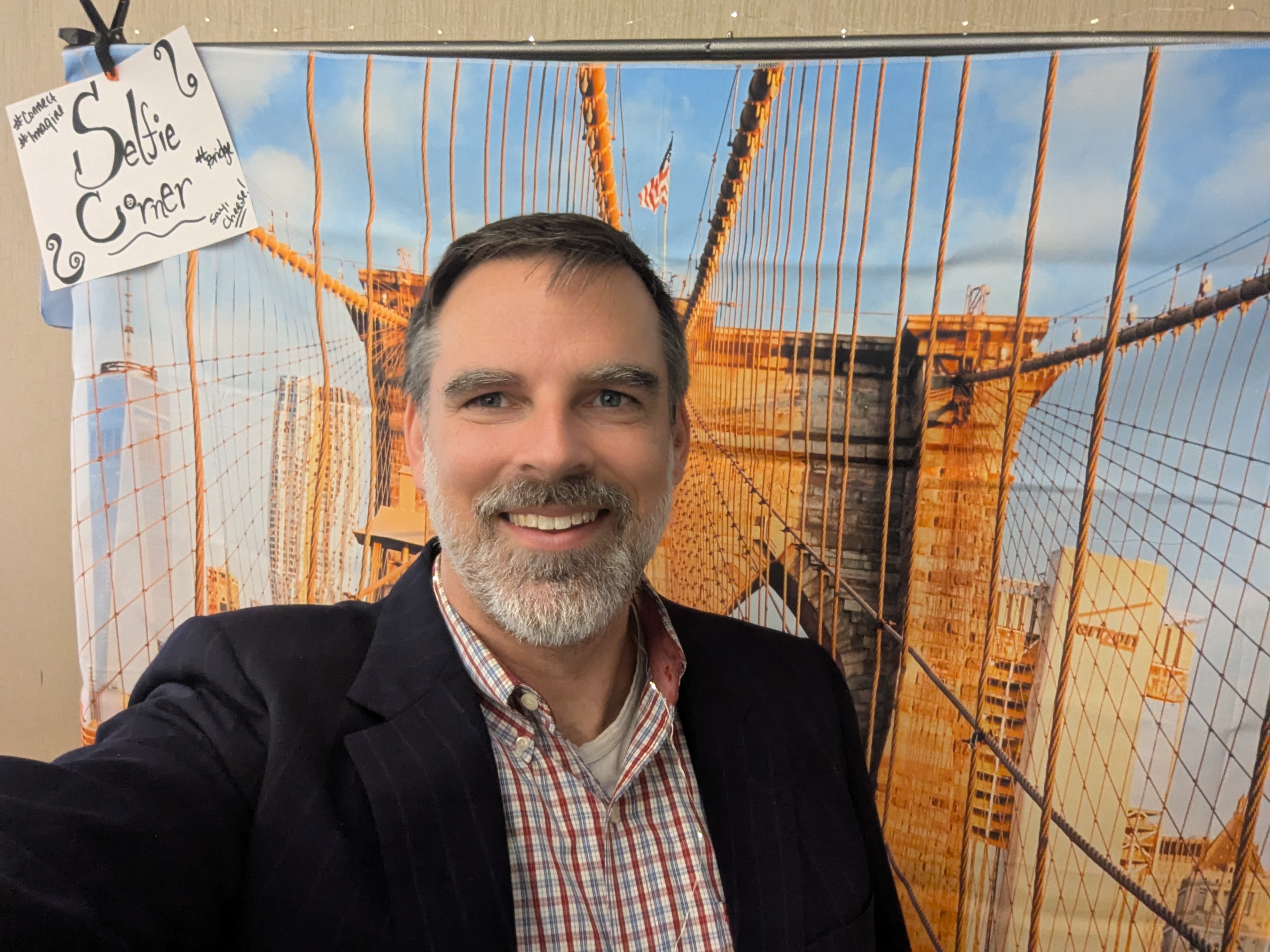
Director of Civic Dialogue Rev. Jerad Morey takes a selfie in front of a photo of the Brooklyn Bridge.
Third, we believe this work can help communities mitigate violence and social fragmentation before harm escalates. Healthy dialogue and depolarization efforts contribute to stronger social cohesion, lower isolation, improved public trust, and more resilient communities. But for Minnesotans, these conversations are not abstract. Over the past year, our state has seen firsthand how toxic polarization can damage both people and public life. Building peace is not optional work. It is part of our responsibility to one another.
We were especially grateful to partner this year with Marnita's Table, one of Minnesota’s longest-standing relationship-building organizations. Through an imaginative and deeply inclusive outreach strategy they helped grow attendance to more than quadruple the size of last year’s inaugural gathering.
Participants came from local government, education, philanthropy, faith communities, nonprofits, mediation organizations, parks and recreation departments, and the private sector. Participants built authentic connections and discovered common ground that might otherwise have remained unseen. Long after the formal program ended, people continued exchanging stories, sharing ideas, and planning future collaborations.
Those connections matter.
We are grateful for the clergy and lay leaders who chose to dedicate a beautiful Friday to the work of peacebuilding and civic healing. We are grateful for the partnerships already beginning to emerge from this gathering. We are grateful for our steering team, our facilitators, and every organization willing to invest in a more connected future for Minnesota.
Most of all, we trust that the ripple effects of this gathering will continue long after the event itself. Minnesota Council of Churches remains committed to equipping faith communities to become active builders of trust, connection, and peace across our state.