
Dear Friends of MCC,
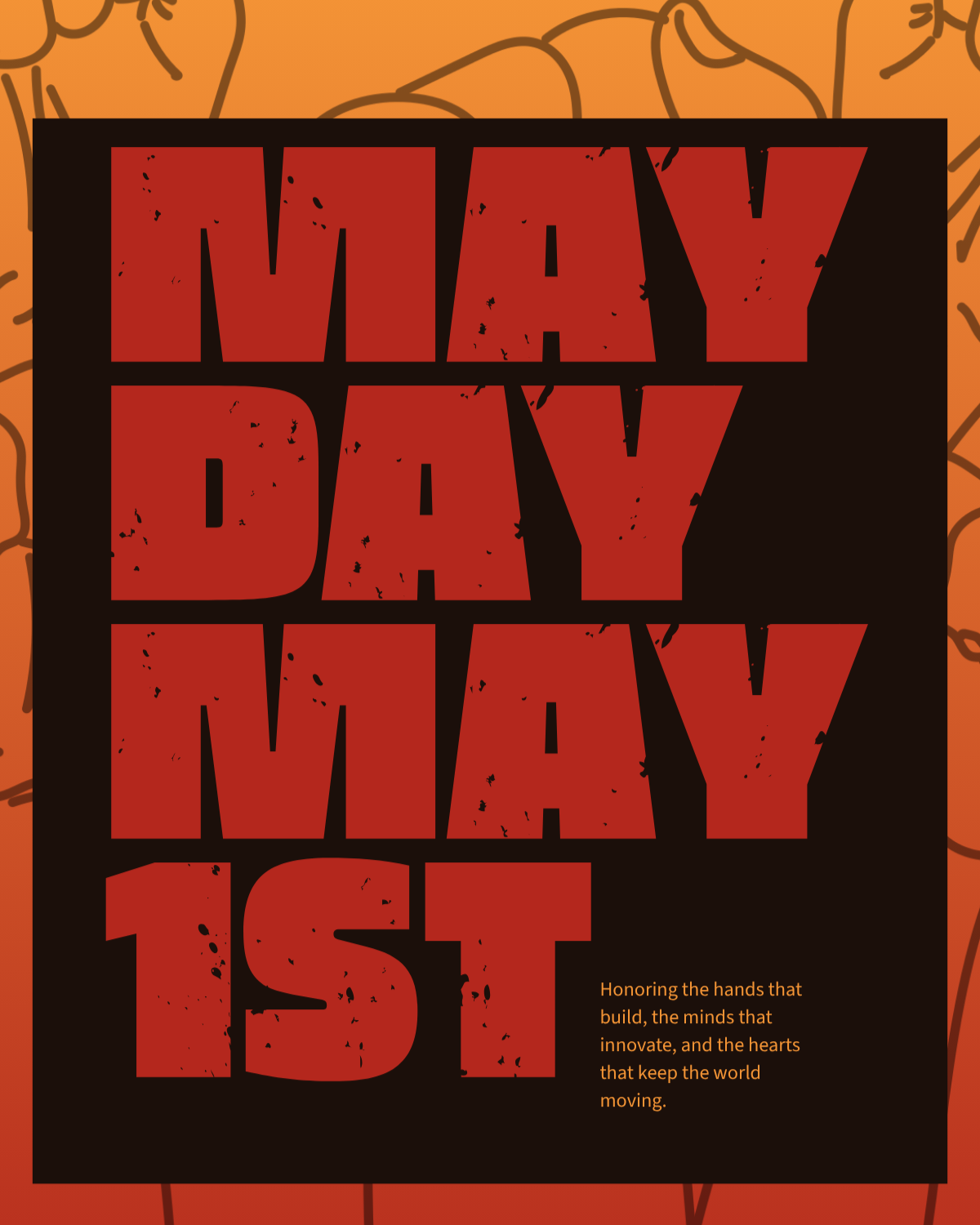
Grace and peace to you on this May Day—a day that has long stood as a witness to the dignity of labor—and on this Day Without Immigrants, when the absence of so many makes visible what has always been true: immigrants are not a margin to our common life. They are essential to it.
Scripture declares, “The stranger who resides with you shall be to you as the citizen among you; you shall love the stranger as yourself” (Leviticus 19:34). Not optional. Not conditional. Commanded.
And yet we are living in a time when voices grow louder that would have us forget. Rhetoric that diminishes. Narratives that distort. Policies that wound.
But the Church must not echo what heaven has already rejected.
Every person bears the image of God.
Every person carries dignity that cannot be stripped away.
Every person matters—fully, fiercely, and without exception.
And today, that truth was not only spoken—it was embodied.
Dozens of Twin Cities clergy and supporters gathered in prayer outside Hennepin County Medical Center, holding a 24-hour vigil. Praying not just for a hospital, but for what it represents: a place where the sick are treated, where the uninsured are not turned away, where dignity is practiced in real time.
We must tell the truth about this moment.
HCMC—our state’s largest trauma center, a training ground for healers, a lifeline for the most vulnerable—is under strain. Federal cuts. Rising uncompensated care. Systems that reward profit over people. And still, it serves.
Still, it shows up.
Still, it heals.
Still, it bears the weight.
And the Gospel meets us right here.
“I was sick and you took care of me” (Matthew 25:36).
Not when it was easy.
Not when it was profitable.
But because it was right.
If we are honest, we are living in a society that too often treats healthcare as a privilege instead of a right. But our faith will not allow us to make peace with that. The image of God does not require insurance coverage. Human dignity is not subject to budget negotiations.
So we pray.
And we speak.
And we advocate.
Because Gospel accountability demands it.
I also cannot speak in this moment without naming what weighs heavily on my spirit.
As a Black woman.
As a religious leader.
As one shaped by the witness of the Black Church and the sacrifice of those who marched, prayed, and bled for the Voting Rights Act—
I am grieved. And I am troubled.
To hear language that suggests racism is no longer a force in this nation, while decisions continue to fall hardest on Black and brown communities, is more than troubling—it is dangerous. It is a rewriting of reality. It is a turning away from truth.
And if we are not careful, it is a slow drift—back toward systems that look and feel like caste, shaped by the same old roots of exclusion and white supremacy.
But hear me clearly:
We remember.
We remember who we are.
We remember where we have come from.
We remember the God who brought us through.
And because we remember—we do not lose hope.
The prophet Amos still cries out: “Let justice roll down like waters, and righteousness like an ever-flowing stream” (Amos 5:24).
Not a trickle.
Not a moment.
A movement.
And Jesus reminds us that what we do for the least of these—the stranger, the sick, the vulnerable—we do unto Him.
So on this day, we stand in that truth.
We affirm that immigrants are beloved of God.
We affirm that the sick and vulnerable are worthy of care.
We affirm that Black and brown lives are sacred.
We affirm that justice is not behind us—it is still calling us forward.
The winds may be strong—but they are not final.
The rhetoric may be loud—but it is not ultimate.
Because the last word belongs to God.
And that word is justice.
That word is mercy.
That word is life.
So we will labor.
We will pray.
We will speak.
We will stand.
And we will do so with prophetic hope—not shallow optimism, but deep, rooted, unshakable faith—that justice will have the final word.
“For we walk by faith, not by sight” (2 Corinthians 5:7).
And by faith—we will keep walking. Together.
In solidarity and hope,
Elder Suzanne P. Kelly
CEO, Minnesota Council of Churches